
Ordinary Rooms Become Threatening
I'm Thinking of Ending ThingsDomestic and institutional spaces turn uncanny as familiar objects are altered, misread, or transformed into signs of confinement.
increasing Bearing strength in each event
 decreasing
Bearing strength in each eventdecreasingThe Apartment at Night
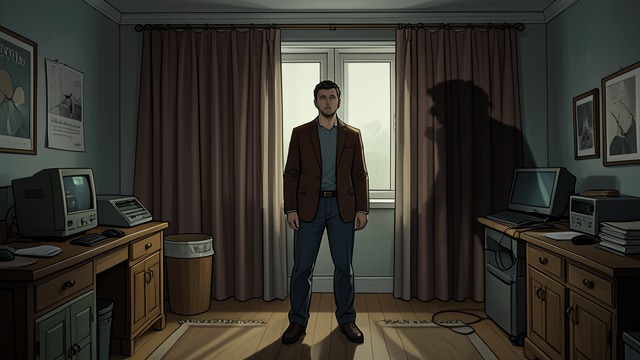
The Apartment at Night
A familiar room feels occupied
The narrator wakes from nightmares convinced that someone is standing in her apartment. She cannot move at first and needs time to fully awaken.
Safety becomes uncertain
A private home no longer guarantees protection. The Caller’s repeated interruptions make nighttime spaces feel vulnerable.
The Farmhouse’s Dark Hall
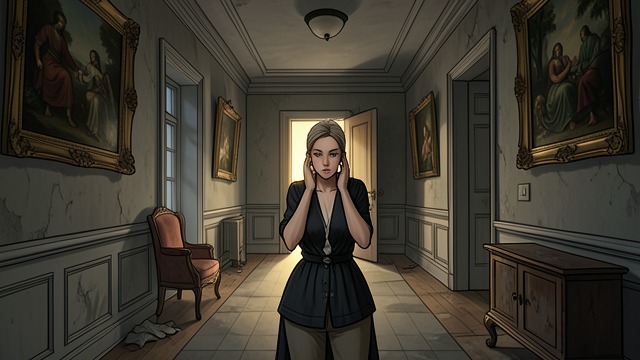
The Farmhouse’s Dark Hall
A house of old rooms
The narrator walks through a tidy but dim house filled with old furniture, paintings, and closed doors. The interior seems preserved from another time.
Domesticity turns uncanny
The ordinary house becomes difficult to trust as family stories and visual clues contradict one another. The familiar function of rooms gives way to suspicion.
The Bathroom Without a Mirror
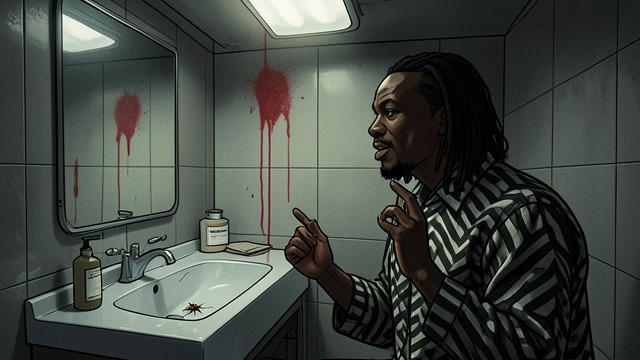
The Bathroom Without a Mirror
A private pause
The narrator enters the farmhouse bathroom, where harsh light and the absence of a mirror make her feel unlike herself. She crushes a sluggish fly in the sink.
A small event becomes ominous
A sense that someone waits outside the door and a sudden nosebleed make the ordinary room feel unsafe. The scene turns bodily unease into domestic suspense.
The School’s Custodian Room
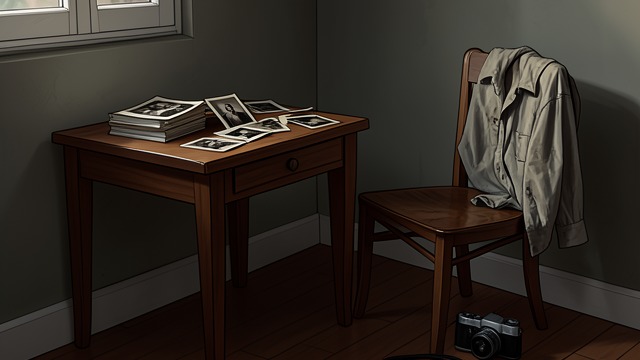
The School’s Custodian Room
A private refuge discovered
The narrator finds a small room with a table, photographs, a shirt, and a camera. Its everyday objects suggest a life hidden inside the institution.
Familiarity becomes intrusion
The room seems connected to her own childhood and to Jake, making its familiarity more disturbing than its dirt or isolation.
The Closet at the End
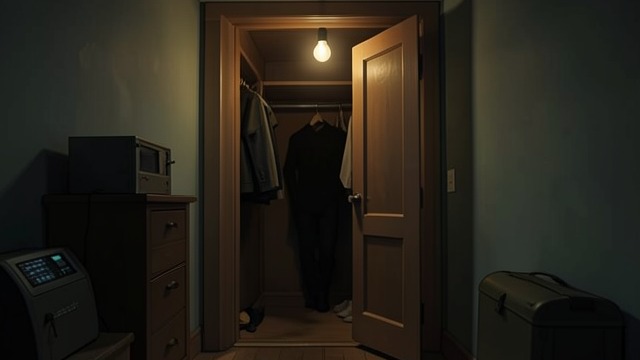
The Closet at the End
A confined space returns
The closing scene focuses on a small closet in the custodian’s room. The space recalls the earlier account of a body found in a closet.
A room becomes an ending
The closet is no longer ordinary storage. It embodies the final confinement of the narrative and the collapse of its imagined escape routes.
During the weeks of the calls
During the farmhouse visit
After dinner at the farm
During the night search
At the final scene
